

ID3 AI Assistant
The ID3 AI Assistant is a conversational copilot developed by Kwantis and integrated into the ID3 Software platform. Designed for real-time drilling-performance monitoring and operational analytics, it enables engineers to query complex rig sensor data and daily drilling reports using natural language.
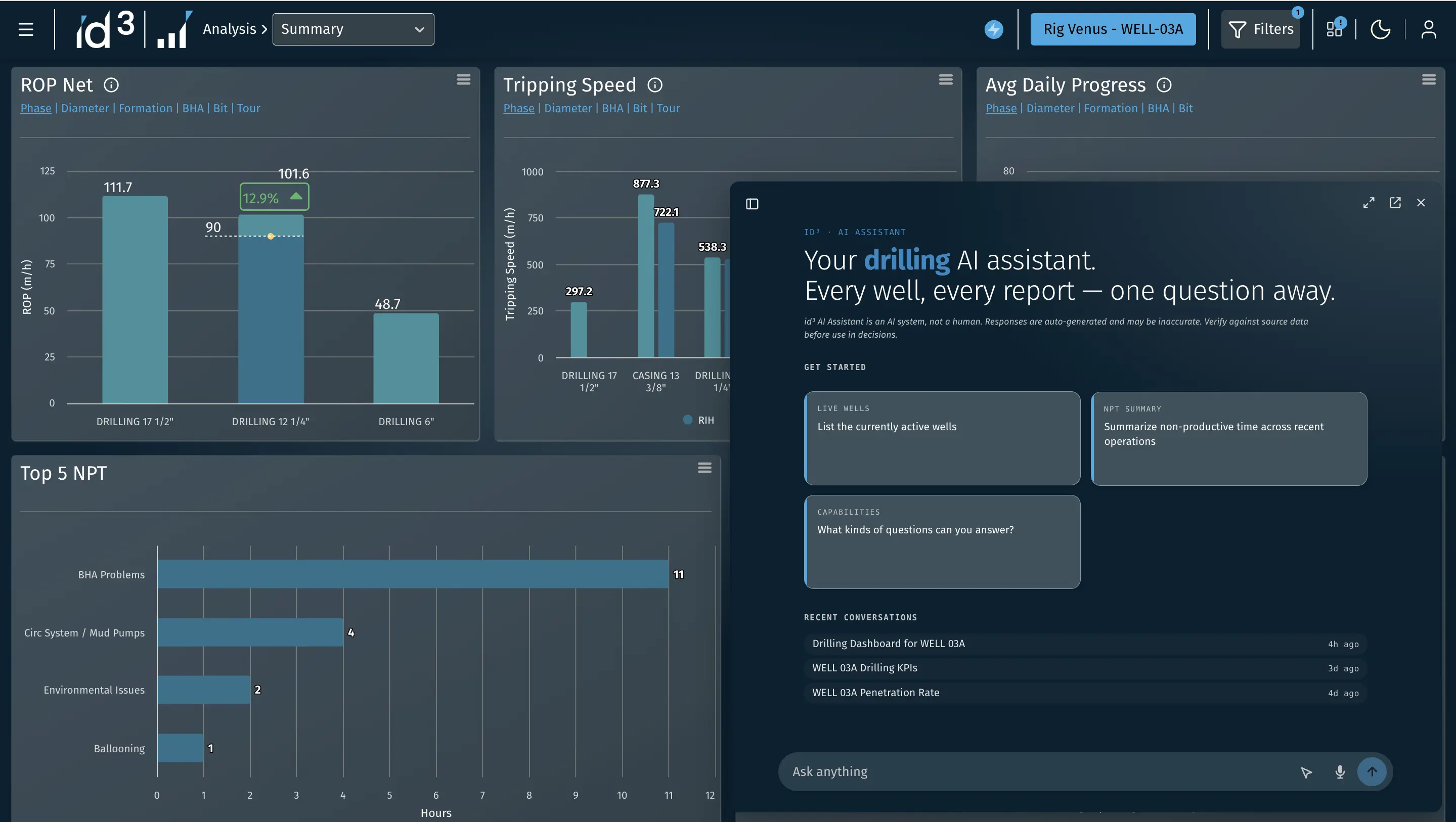
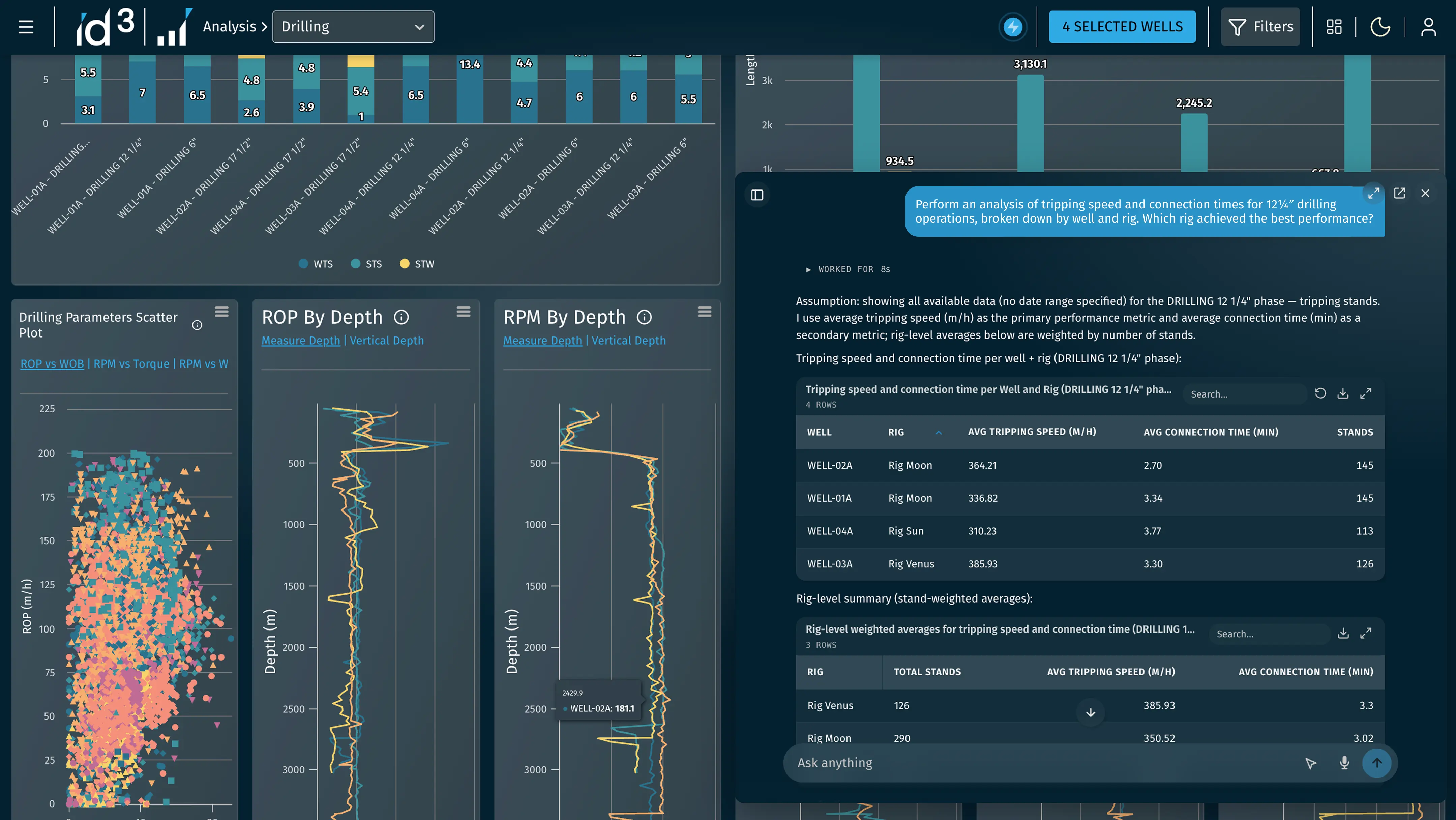
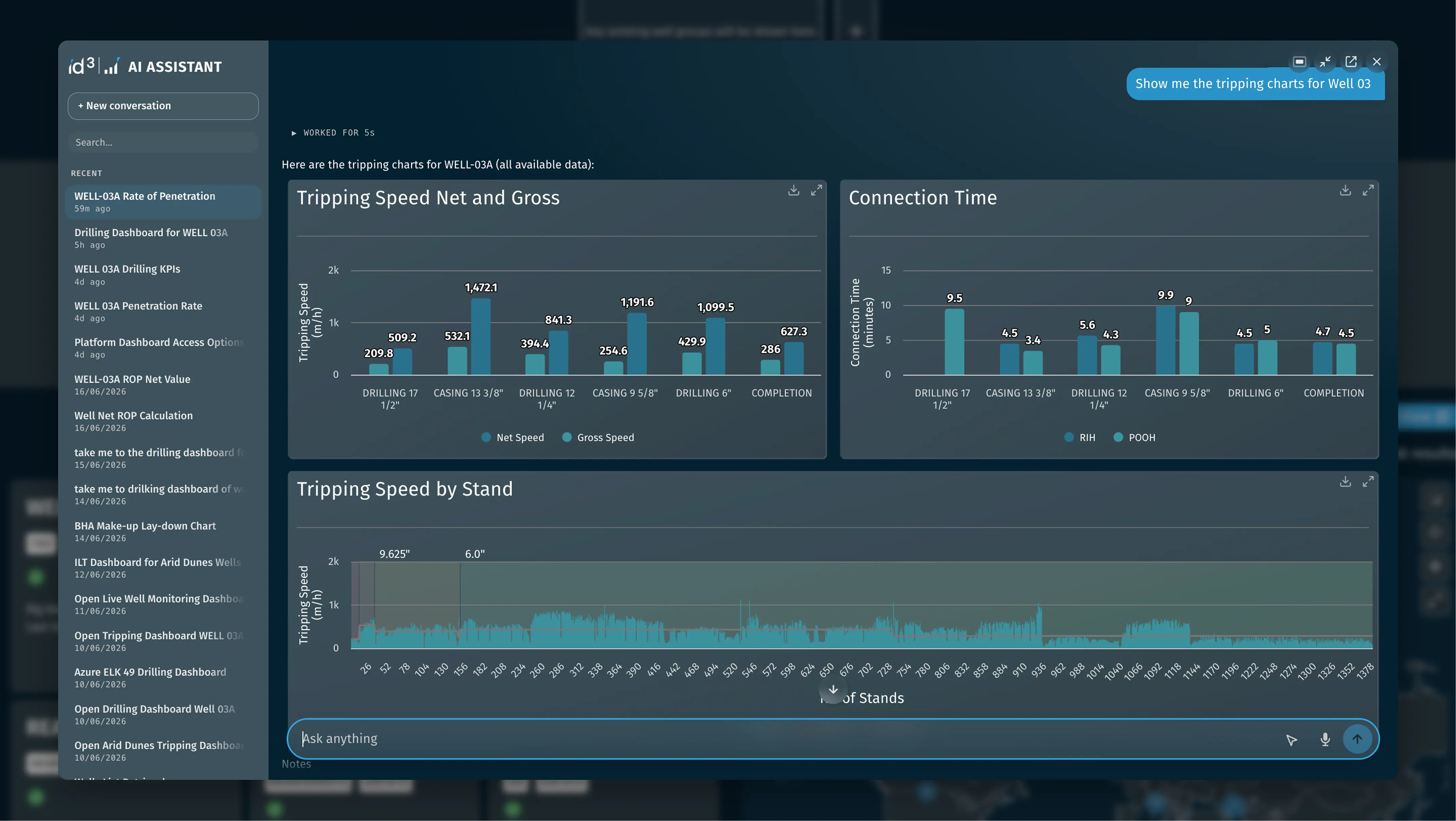
The ID3 AI Assistant is an LLM-powered conversational capability within ID3 Benchmark module. It connects high-frequency rig sensor data with lower-frequency operational reports, allowing drilling engineers to explore complex datasets through natural-language questions instead of navigating multiple dashboards or writing SQL queries.
The assistant translates each question into the appropriate data query, retrieves information from structured and semi-structured sources, interprets the results, and presents clear, contextualized answers.
Beyond information retrieval, the assistant helps engineers monitor drilling performance as operations unfold, compare live results with predefined targets, detect deviations earlier, and establish KPI benchmarks for future wells. Users can investigate topics such as lithology, formations, well trajectory, drilling performance, and bit selection, as well as conduct faster multi-well analyses. Persistent chat histories, session memory, live data-retrieval visualization, and parallel data fetching support more continuous and efficient workflows. Built-in safeguards provide controlled data access while supporting accuracy and security. Overall, the assistant reduces the time and cognitive effort required to gather and interpret operational information, enabling engineers to focus on analysis and informed decision-making.
Key Features

Persistent Insights
Save conversations and resume analyses across devices.

Natural-Language Queries
Explore complex drilling data without SQL

Cross-Source Analysis
Combine rig sensor data and operational reports
